


 Paul Slowey
Ethics in Every Lesson: Practical Strategies for Secondary Classrooms
Teaching ethics in secondary schools often feels like an added burden on an already full timetable. You want your students to engage deeply with values, judgement, and real-world dilemmas—but where’s the time to plan meaningful lessons? This post shares practical, ready-to-use strategies that reduce your workload while boosting student agency, empathy, and critical thinking across subjects. Let’s build a shared language for ethics that sparks confident, future-focused learners. Explore more about this approach here.
Embedding Ethics Across Subjects

Ethics can be integrated across different subjects, making it easier for students to connect learning with real-world applications. Here’s how you can get started.
Ready-to-Use Protocols
Imagine having a toolkit ready to go for your next class. These protocols bring ethics into any lesson. Start by choosing a protocol that fits your subject. Use the Think-Pair-Share method to encourage students to share their thoughts on ethical dilemmas. This method fosters collaboration and deep thinking.
Next, try the Jigsaw method. Divide students into groups, each focusing on a different aspect of an ethical issue. They then teach each other, promoting a comprehensive understanding. You can find more strategies in this resource.
Rich Case Studies in Ethics
Case studies bring ethics to life. Present a real-world scenario relevant to your subject. For example, in a science class, discuss the ethics of genetic modification. In history, explore the moral decisions in key events.
Encourage students to debate different perspectives. This not only helps them understand the complexity of ethical issues but also develops empathy. Use these guidelines to craft your case studies.
Future-Focused Assessment
Assessments should reflect students’ understanding of ethics. Use project-based assessments where students propose solutions to ethical problems. This encourages critical thinking and creativity.
Consider peer assessments where students review each other’s work, promoting accountability. This approach ensures that assessments are not just about grades but also about learning and growth. Learn more about this approach to assessment here.
Building a Shared Language

Creating a common language around ethics helps unify teaching across subjects and supports a school-wide approach to values education.
Values Education in Action
Values education is more than just talking about values. It’s about seeing them in action. Start by identifying core values with your students. Discuss what these values look like in everyday life.
Create classroom activities that reflect these values. For instance, organise a community service project that embodies kindness and responsibility. This hands-on approach makes values tangible and memorable.
Inclusive Classroom Dialogue
Dialogue is a powerful tool for teaching ethics. Foster an environment where every student feels heard. Use circle discussions to ensure everyone participates. Pose open-ended questions to spark deep thinking.
Encourage diverse opinions and teach students to listen actively. This not only enhances their learning but also builds a respectful community. Explore more techniques here.
Debate Protocols for Teens
Debate sharpens students’ critical thinking and argumentation skills. Introduce structured debates on ethical dilemmas relevant to their lives. Teach them how to research and present arguments effectively.
Encourage them to consider opposing views and build counterarguments. This practice not only enhances their analytical skills but also prepares them for future challenges.
Deepening Ethical Reasoning
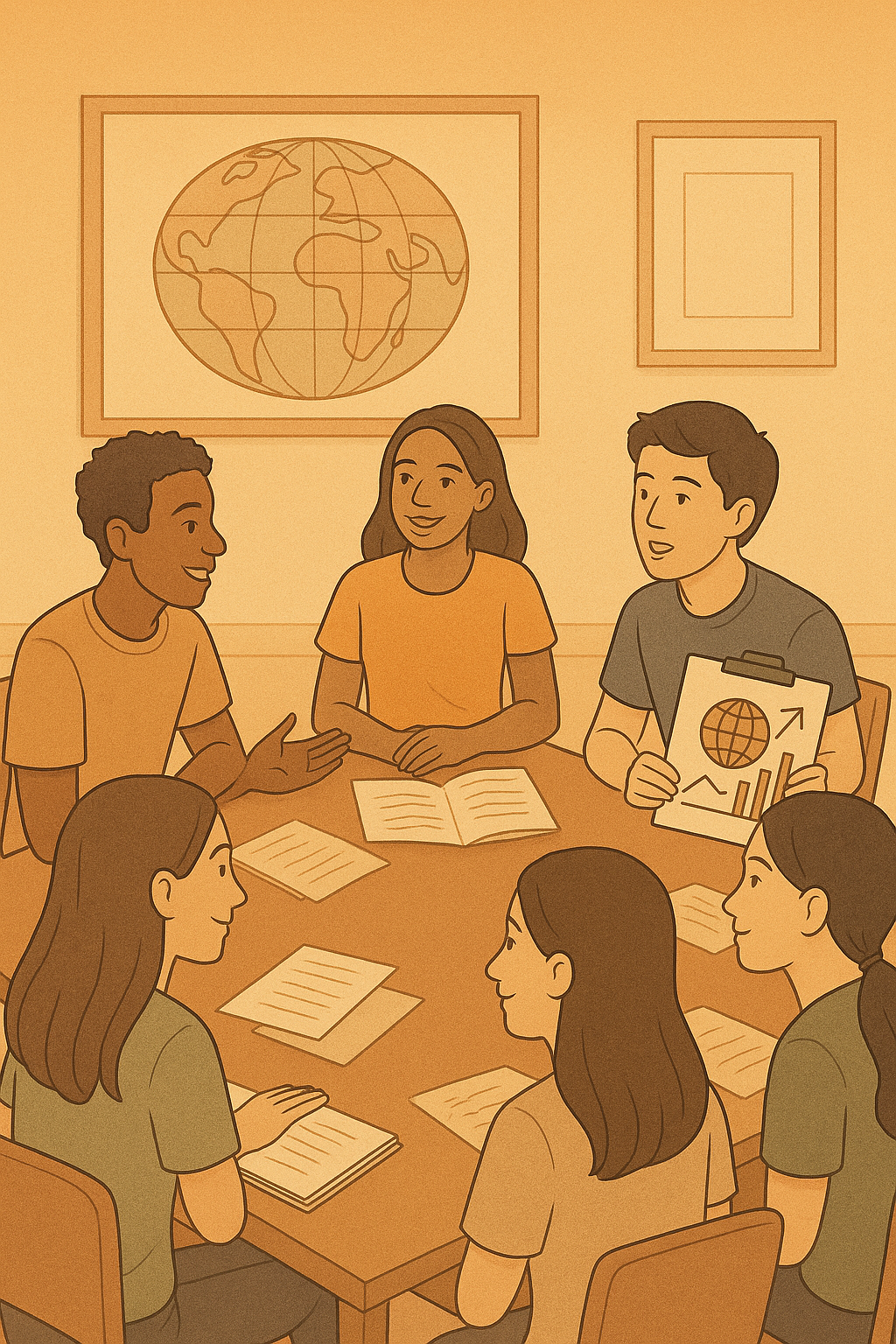
To truly engage students, ethics education must go beyond surface-level understanding, encouraging them to think deeply about complex issues.
Socratic Seminars and Discussions
Socratic seminars foster critical thinking. Begin with a provocative question about an ethical issue. Let students explore the question through dialogue. Encourage them to question assumptions and consider multiple viewpoints.
This method develops their ability to think independently and collaboratively. It also enhances their ability to articulate thoughts clearly. This guide offers more on implementing Socratic seminars.
Project-Based Learning Ethics
Project-based learning (PBL) offers a practical way to explore ethics. Choose a project that ties into your curriculum and involves an ethical component. For instance, a sustainability project in geography or a health campaign in biology.
Students work on these projects over time, applying ethical reasoning to real-world challenges. PBL not only develops their problem-solving skills but also their ability to work collaboratively.
Real-World Learning and Digital Citizenship
Incorporate digital citizenship into your ethics curriculum. Discuss the ethical implications of online behaviour. Teach students about privacy, cyberbullying, and digital footprints.
This real-world learning prepares them for navigating the digital landscape responsibly. It also reinforces the importance of ethics in every aspect of life.
🌟📚
By embedding ethics across subjects, building a shared language, and deepening ethical reasoning, you can equip students with the tools they need to navigate a complex world. This approach not only enhances their learning but also their ability to contribute positively to society.
